Overview
Spiro is a pan-African electric-mobility company built around a single, focused bet: electrify the continent's motorcycle-taxi economy. Founded in 2022, it is a subsidiary of the Dubai-based investment platform Equitane and is headquartered in Dubai, with Nairobi serving as its main operations hub. The company was founded by Gagan Gupta, who also chairs Equitane, and is led by CEO Kaushik Burman.
Rather than competing across every vehicle category, Spiro concentrates exclusively on electric two-wheelers and the energy infrastructure that keeps them running. It describes itself as Africa's largest electric-mobility company and operator of the continent's fastest-growing battery-swapping network. Across its seven active markets — Kenya, Rwanda, Uganda, Togo, Benin, Nigeria and Cameroon — Spiro has deployed more than 100,000 electric motorcycles and over 2,500 battery-swap stations, circulated more than 300,000 batteries, completed over 30 million swaps, and logged more than one billion carbon-free kilometres. It has set a target of two million bikes in circulation across Africa by 2030, and is eyeing entry into the Democratic Republic of Congo and Ethiopia.
The Kenya story
Spiro commenced Kenyan operations in September 2023, launching alongside a national e-mobility push championed by the government. It has since become the dominant player in the country's young electric two-wheeler market, capturing roughly 60% of new electric-motorcycle sales in 2025 and taking over a majority share of the overall electric-bike market.
By late 2025, Spiro's Kenyan fleet had grown past 8,000 electric motorcycles. The company has scaled its footprint aggressively, moving from greater Nairobi into Uasin Gishu (Eldoret), Nandi (Kapsabet), and then Kisumu, Kisii and Kakamega, before pushing into counties such as Machakos — where it deployed 200 bikes in a single day in Mwala. As of early 2026 it reported a presence in 30 counties and has set a goal of reaching all 47 by the end of 2026.
Manufacturing and jobs
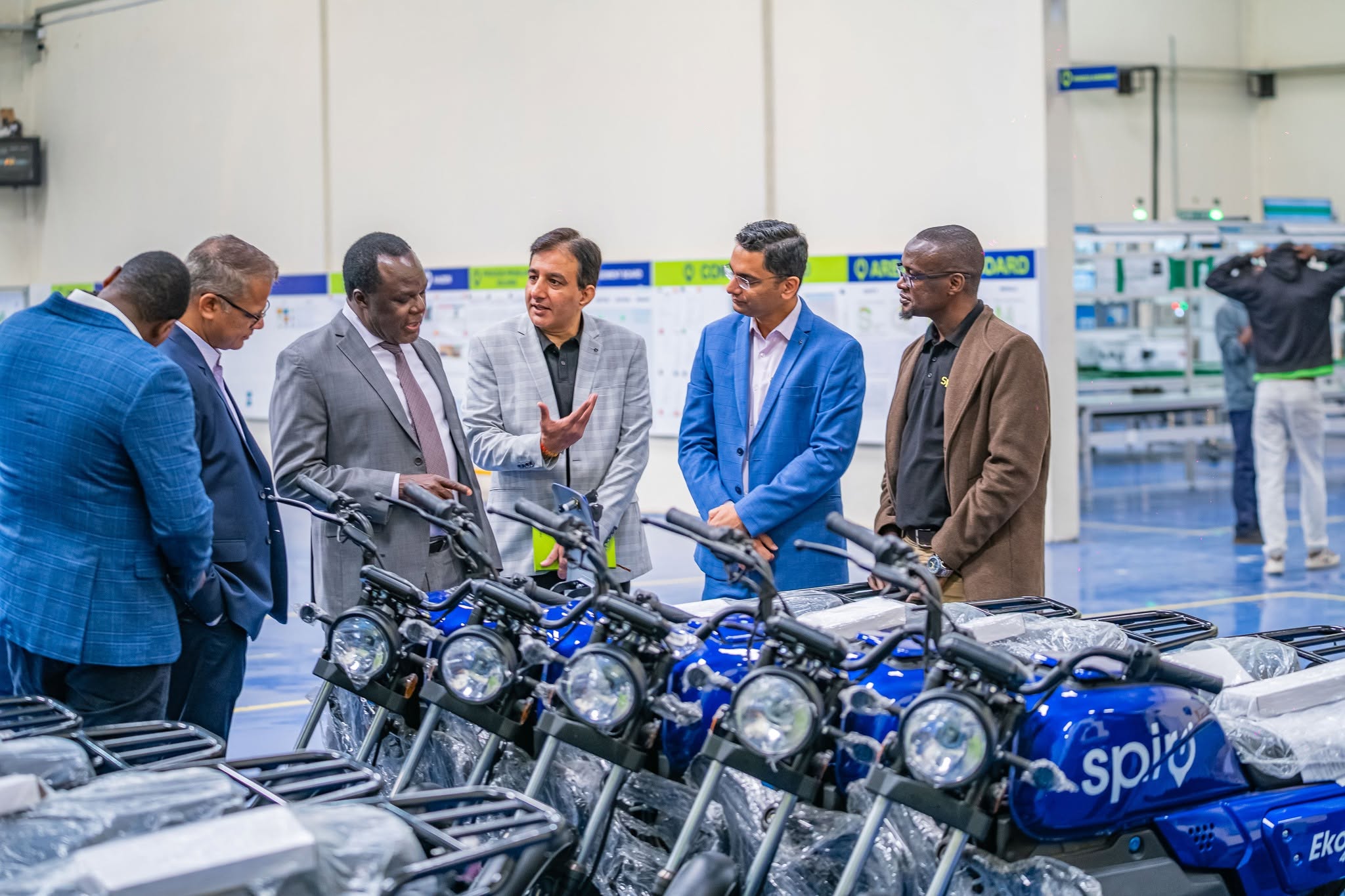
Spiro runs a vehicle assembly plant on Old Mombasa Road in Nairobi, opened in September 2024, where motorcycles are put together from completely knocked-down (CKD) kits — imported parts assembled locally. Notably, the bikes' motors are manufactured locally, on an assembly line run entirely by a team of around 40 women. The plant created roughly 60 direct jobs at launch, with plans to grow past 100. After-sales service is offered across Mombasa, Nairobi, Eldoret and Kisumu.
In 2026, Spiro announced plans to open its first African research-and-development centre in Kenya — its first engineering hub on the continent — and acquired motorcycle-engineering firm Coexlion to deepen its product-development and localisation capabilities.
The swap-station network
The cornerstone of Spiro's model is battery-as-a-service. The company retains ownership of the batteries and operates a network of swap stations where a rider can exchange a depleted battery for a fully charged one in under a minute — sidestepping both the high upfront cost of batteries and the "range anxiety" that comes with unreliable charging.
In Kenya, the swap network has grown rapidly, from roughly 200 stations in late 2025 to more than 400 by early 2026. A single battery swap costs about KES 290 (around $2.24). Stations come in several formats:
- Brick-and-mortar stations — rented shop space fitted with racks holding up to 24 batteries.
- Automated, unmanned stations — cabinets holding around 12 batteries that riders unlock via app, accessible 24 hours a day and frequently sited at partner petrol stations.
- Modular rack setups — configurable shelving in units of 12, 24 or 36 batteries, sized to local demand.
The flagship model, the EKON 450M1, runs a 4.5 kW motor (peaking at 9 kW), tops out below 85 km/h, and delivers 80–100 km of range per battery.
Pricing, loans and financing
Spiro's commercial proposition rests on lower running costs: the company estimates an e-bike costs at least 30% less to run than a petrol equivalent, and riders have reported daily profits climbing meaningfully after switching. Fuel alone often eats 40–60% of a traditional rider's daily income.
On affordability and financing:
- Bike pricing sits at roughly KES 295,000 over a full credit term, with a down payment of about KES 20,000 to start a credit purchase; some riders have reported lower cash prices closer to KES 195,000.
- A daily subscription of around KES 255 ($2) repays the outstanding balance and grants access to the swap-station network.
- Cheaper credit. Spiro's connected IoT vehicle technology and asset-tracking have sharply reduced default risk, helping pull rider financing rates down from the punishing 45–50% range historically seen in the sector toward 15–16%.
- Zero-interest pilot. Spiro partnered with Kenyan boda-boda finance firm BodaBoost to pilot interest-free financing — structured along Islamic finance principles — for the first 5,000 customers in Nairobi.
- Third-party asset finance. Mainstream financiers such as MOGO also offer loans for Spiro bikes, broadening the routes riders can take to ownership.
Venture funding and debt
Spiro has assembled one of the largest capital stacks in African e-mobility, blending equity from development-backed investors with debt from trade-finance institutions. Key milestones:
- 2023 — a roughly $63 million debt package arranged by GuarantCo and Société Générale.
- 2024 — a $50 million loan from Afreximbank.
- October 2025 — a $100 million equity round led by the Fund for Export Development in Africa (FEDA), Afreximbank's development arm; described at the time as the sector's largest African capital raise.
- February 2026 — a $50 million debt facility from Afreximbank, climate financier Nithio and the Africa Go Green Fund. Within this, Nithio's FAIR Fund provided about $7 million (roughly KES 903 million) earmarked partly for the Kenyan rollout.
- June 2026 — a landmark $215 million equity raise, with investors including Impact Fund Denmark and Equitane, pushing the company closer to unicorn territory.
Proceeds across these rounds are directed at expanding the swap network, scaling local assembly, advancing the technology platform (automated swaps, fast charging, solar-powered stations) and entering new markets.
Government partnership
Spiro's Kenyan growth is tied to national policy ambition. The government has set a headline target of putting at least one million electric motorbikes on Kenyan roads, with Spiro as a central partner and a stated plan to expand battery charging and swap infrastructure dramatically — figures of up to 3,000 stations have been cited. The boda-boda sector is enormous: Kenya is home to an estimated 1.5 million riders, making it one of Africa's largest motorcycle-taxi markets.
Find Spiro swap stations and bikes on SwapIt
If you want to see where Spiro's swap stations actually are — or browse the bikes themselves — the SwapIt mobile app is the easiest way in. Download SwapIt to locate nearby Spiro swap stations on the map and plan your swaps: https://play.google.com/store/apps/details?id=ke.kiura.stimapp Browse Spiro directly on the app to view the brand's bikes and details: https://swapit.ke/s/brands/7 (or https://swapit.ke/brands/7)
Whether you're a boda-boda rider weighing the switch to electric or just curious about how the swap network works on the ground, SwapIt puts the stations and the bikes in one place.
Sources: TechCabal, Business Daily, CleanTechnica, electrive, CNN, Ventureburn, Launch Base Africa, Mobility Rising, EVShift, AP, and Spiro company statements (2023–2026), Spiro Kenya Facebook Social media.